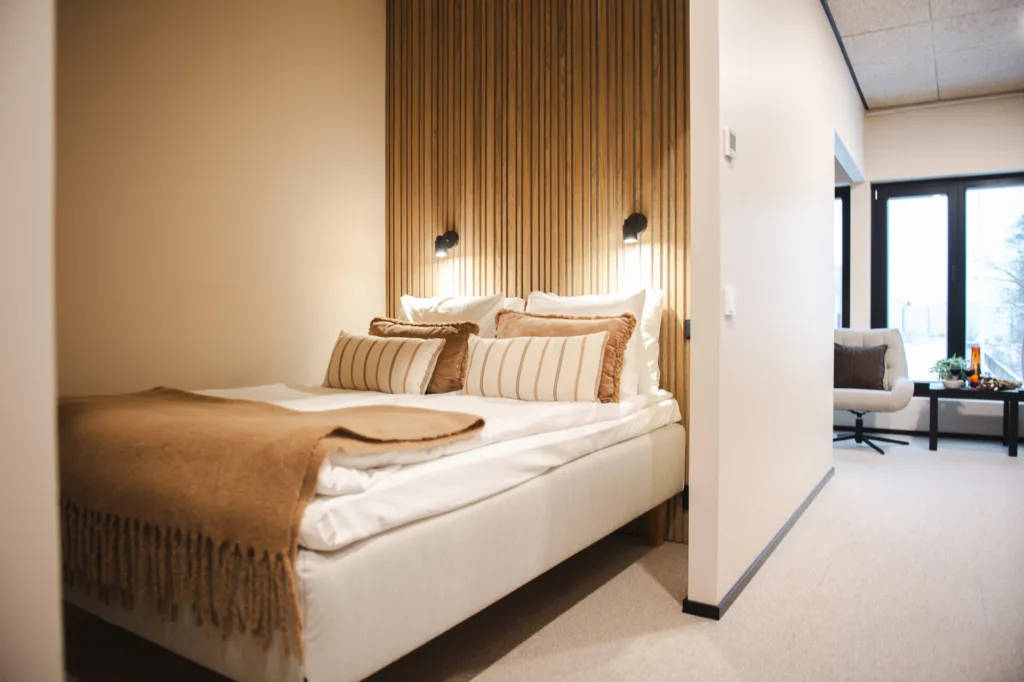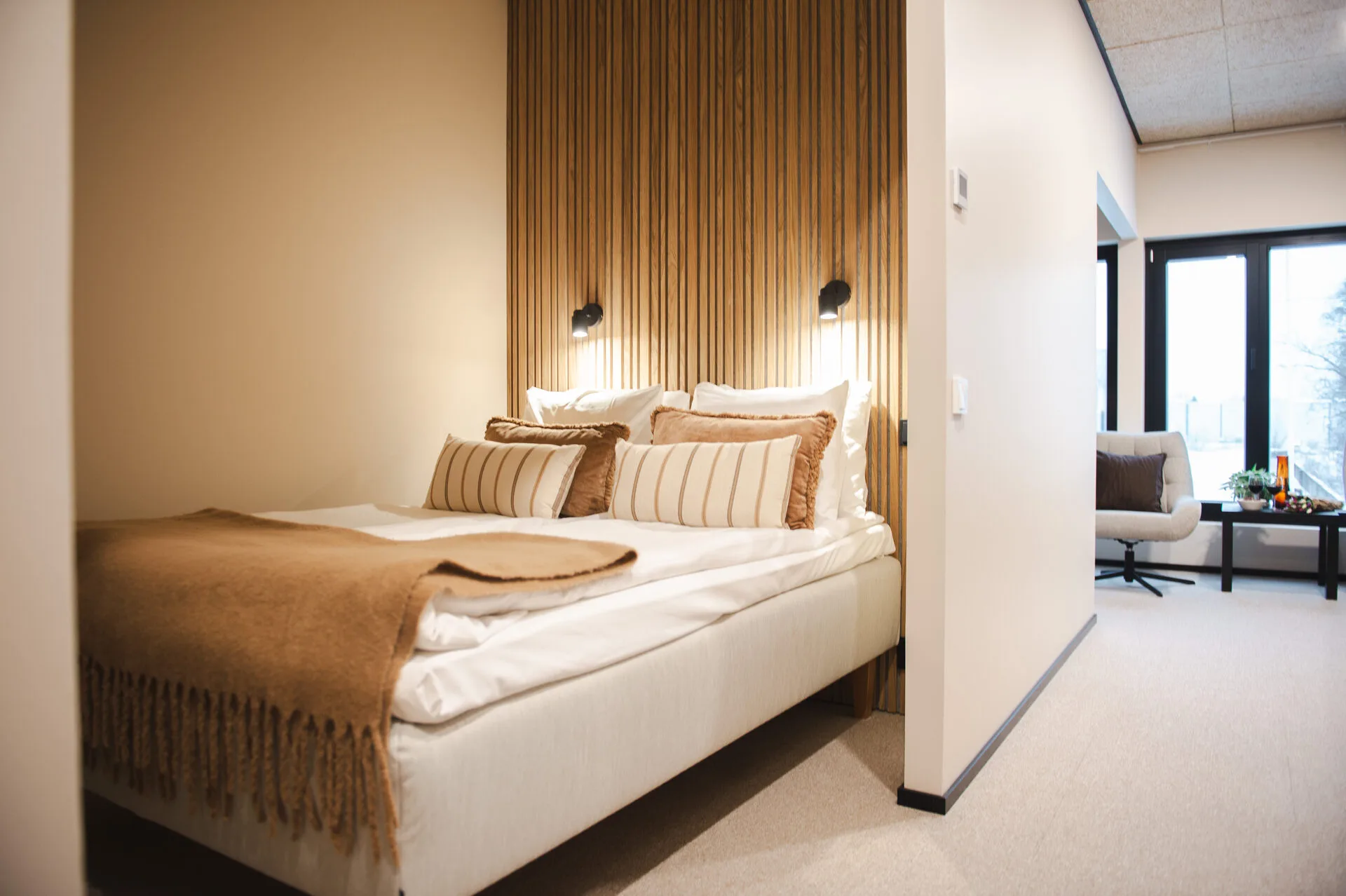
Soundproofing and air quality matter in hotel accommodation because they directly determine how well guests sleep and recover during their stay. Poor acoustics and stale air disrupt rest even when every other aspect of a room is excellent, making these invisible features among the most important factors in hotel room quality. The questions below unpack exactly why each element matters and what to look for when choosing where to stay.
How does poor soundproofing affect sleep quality in hotels?
Poor soundproofing in a hotel room directly fragments sleep by allowing external noise to penetrate at levels that trigger the brain’s alertness response, even when guests are not fully conscious. Corridor conversations, elevator machinery, street traffic, and neighbouring room sounds all interrupt the deeper sleep stages that the body needs for genuine rest and recovery.
The problem is not simply about loud noise. Research in sleep science consistently shows that irregular, unpredictable sounds are more disruptive than steady background noise, because the brain cannot habituate to them. A door slamming once at 2 am causes more damage to sleep architecture than a constant low hum. In hotels, where guests have no control over the behaviour of other guests or the building’s mechanical systems, this unpredictability is constant.
The consequences extend beyond feeling tired in the morning. Chronically disrupted sleep during a multi-night stay impairs cognitive performance, mood, and immune function. For business travellers attending meetings or project workers needing sustained concentration, this is a practical problem with measurable consequences for their work.
What makes a hotel room well soundproofed?
A well-soundproofed hotel room combines dense construction materials, sealed gaps, and acoustic absorption to prevent sound from entering, transmitting through walls, or echoing within the space. No single element achieves this alone; effective hotel room acoustics require several layers working together.
The most important factors include:
- Wall and ceiling mass: Heavier, denser materials absorb and block sound more effectively than thin partition walls. Concrete and double-layered drywall with insulation between them significantly reduce sound transmission.
- Sealed gaps: Sound travels through the smallest openings. Properly sealed door frames, window edges, and penetrations for pipes or cables prevent flanking noise that bypasses even thick walls.
- Double or triple glazing: Windows are the weakest acoustic point in most rooms. Multi-pane glass with an air or gas gap dramatically reduces traffic and street noise.
- Soft furnishings: Carpets, curtains, upholstered furniture, and acoustic panels absorb sound within the room, reducing echo and making the space feel quieter even when some external noise is present.
- Solid-core doors: Hollow doors transmit corridor noise easily. Solid-core doors with proper seals at the base and frame are a meaningful upgrade for sleep quality.
Hotels that invest in these elements during construction or renovation are making a long-term commitment to guest rest rather than simply decorating for visual appeal.
Why does air quality matter more in hotel rooms than at home?
Air quality matters more in hotel rooms than at home because guests have no control over the ventilation system, cannot open windows in many modern hotels, and are sleeping in a space used by many different people. At home, residents unconsciously manage air quality through habits and familiarity; in a hotel room, they are entirely dependent on the hotel’s systems and maintenance.
Hotel rooms accumulate allergens, cleaning product residues, and CO2 from occupants far more rapidly than a private home, where ventilation is typically more varied and occupancy is consistent. A room that has been cleaned with strong chemicals and then sealed before a guest arrives can have air quality that disrupts breathing and sleep even if the room looks and smells clean.
Elevated CO2 levels in a poorly ventilated room are a particular concern. As CO2 rises during the night from normal breathing, sleep quality degrades, headaches become more likely, and the guest wakes feeling unrested despite adequate hours in bed. This is a common but underrecognised cause of the “hotel room fatigue” many travellers experience.
What are the signs of poor air quality in a hotel room?
The signs of poor air quality in a hotel room include a persistent stale or musty smell, difficulty breathing comfortably, headaches that develop during the stay, dry eyes or throat, and waking up feeling unrested despite sleeping for a full night. These symptoms often appear together and are frequently misattributed to travel fatigue.
Other observable indicators include:
- Ventilation grilles that are visibly dusty or blocked
- A chemical or artificial fragrance smell that masks rather than replaces stale air
- Condensation on windows suggesting poor humidity control
- A room that feels stuffy within minutes of closing the door
- Visible mould or damp patches near windows, bathroom tiles, or wall edges
Guests who notice these signs should request a room change or ask the front desk to have the ventilation checked. A hotel that takes air quality seriously will respond promptly rather than dismissively.
How should hotels maintain ventilation and air quality standards?
Hotels should maintain ventilation and air quality through regular filter replacement in HVAC systems, scheduled deep cleaning of air ducts, humidity monitoring, and the use of cleaning products that do not leave harmful residues. These are operational commitments, not one-time installations, and they require consistent attention across every room and common area.
Best practice includes ensuring that ventilation systems provide a meaningful air exchange rate per hour, particularly in rooms with limited natural airflow. Humidity should be kept within a range that prevents both dryness and mould growth. Rooms should be aired thoroughly between guests rather than simply re-scented, and any guest complaint about air quality should trigger an immediate inspection rather than a generic response.
Hotels that treat air quality as a hospitality priority rather than a maintenance checkbox tend to invest in better filtration technology and train housekeeping staff to recognise the signs of ventilation problems before guests report them.
What should guests look for when choosing a hotel for better rest?
Guests looking for better rest should prioritise hotels that explicitly mention soundproofing, room acoustics, and ventilation quality in their room descriptions and that demonstrate a genuine philosophy around sleep and recovery rather than focusing exclusively on visual design and amenities.
Practical things to look for include:
- Rooms positioned away from elevators, stairwells, and street-facing walls
- Double or triple-glazed windows mentioned in room specifications
- Hotels that describe their bedding and sleep environment in detail, signalling that rest is a priority
- Guest reviews that specifically mention quiet rooms and good air quality rather than just decor
- Properties that have invested in the physical environment rather than relying on heavy marketing language
At Wasto Inn, we have built our accommodation philosophy around exactly this principle: quality rest is the foundation of a successful stay. Our rooms are designed with attention to sound insulation, air quality, and bedding standards, because we believe that guests who sleep well are guests who return. Our 18 hotel rooms accommodate up to four guests each and are equipped with private kitchen corners, access to shared kitchen facilities, and direct access to the Ole.fit gym, giving both business travellers and leisure guests everything they need for a stay that genuinely restores rather than merely accommodates.
Related Articles
- What services does a quality fitness hotel offer its guests?
- What do modern hotel rooms offer business travelers in 2026?
- What should you ask a hotel before making a long-term booking?
- What is an aparthotel and how does it differ from a traditional hotel?
- Can a fitness hotel accommodate a group of up to four guests per room?