A quality fitness hotel offers its guests a seamless combination of comfortable accommodation and professional-grade wellness facilities, all under one roof. Unlike a standard hotel with a basic gym tucked in the basement, a true fitness hotel integrates training, recovery, nutrition, and restful sleep into every aspect of the guest experience. Below, we answer the most common questions about what separates a fitness hotel from the rest.
What makes a hotel a true fitness hotel?
A true fitness hotel is one where physical well-being is central to the entire guest experience, not an afterthought. This means professional gym facilities, recovery services, wellness-focused room design, and health-supportive dining all work together as a unified offering rather than isolated add-ons. The gym is not a perk – it is part of the core product.
The clearest marker of a genuine fitness hotel is that gym access is included in the room rate, not sold separately. Beyond that, the quality and scale of the facilities matter enormously. A fitness hotel should offer equipment and space comparable to a dedicated training centre, not a few treadmills squeezed into a spare room. At Wasto Inn in Kokkola, for example, guests have direct access to a 1,700 m² Ole.fit gym as part of their stay, which sets a clear standard for what fitness hotel amenities can look like.
What gym and workout facilities should a fitness hotel include?
A hotel gym worthy of the fitness hotel label should include a wide range of strength and cardio equipment, dedicated free-weights areas, functional training zones, and enough floor space for stretching and bodyweight work. Group fitness studios, personal training availability, and extended or 24-hour access are strong indicators of a serious facility.
The difference between a token hotel gym and a proper fitness hotel gym comes down to scale and variety. Guests should be able to follow their existing training routine without compromise, whether that means heavy compound lifts, high-intensity cardio, or mobility work. Equipment should be well maintained, the space should be well ventilated, and the environment should feel motivating rather than clinical.
For guests who travel frequently for work or projects, the ability to train consistently without paying extra for a day pass at a local gym is a genuine practical benefit. It removes friction from maintaining a healthy routine while away from home.
What spa and recovery services do fitness hotels typically offer?
Fitness hotels typically offer spa and recovery services that complement active training, including sauna facilities, massage treatments, hydrotherapy options such as pools or cold exposure, and relaxation areas designed for post-workout recovery. The goal is to support the body’s ability to rest and repair, not just to provide luxury.
Recovery is increasingly recognised as just as important as the training itself, and quality fitness hotels reflect this understanding in their amenity mix. Sauna access is particularly valued in Nordic countries for its proven role in muscle recovery and stress reduction. Spa treatments such as deep-tissue massage, physiotherapy-style bodywork, and contrast therapy can meaningfully accelerate recovery between training sessions.
Looking ahead, Wasto Inn’s expanded Fitness and Spa concept opening in 2026 brings together a modern gym, spa treatments, a sauna section, and an indoor swimming pool, offering guests a genuinely complete wellness environment in Kokkola.
How do fitness hotels design rooms differently from regular hotels?
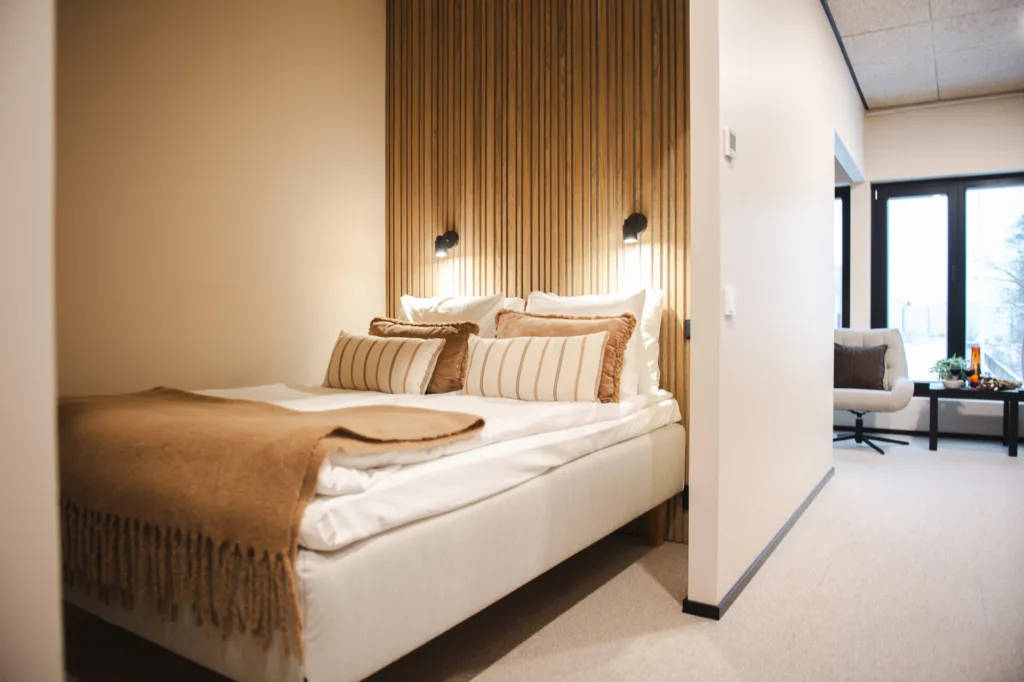
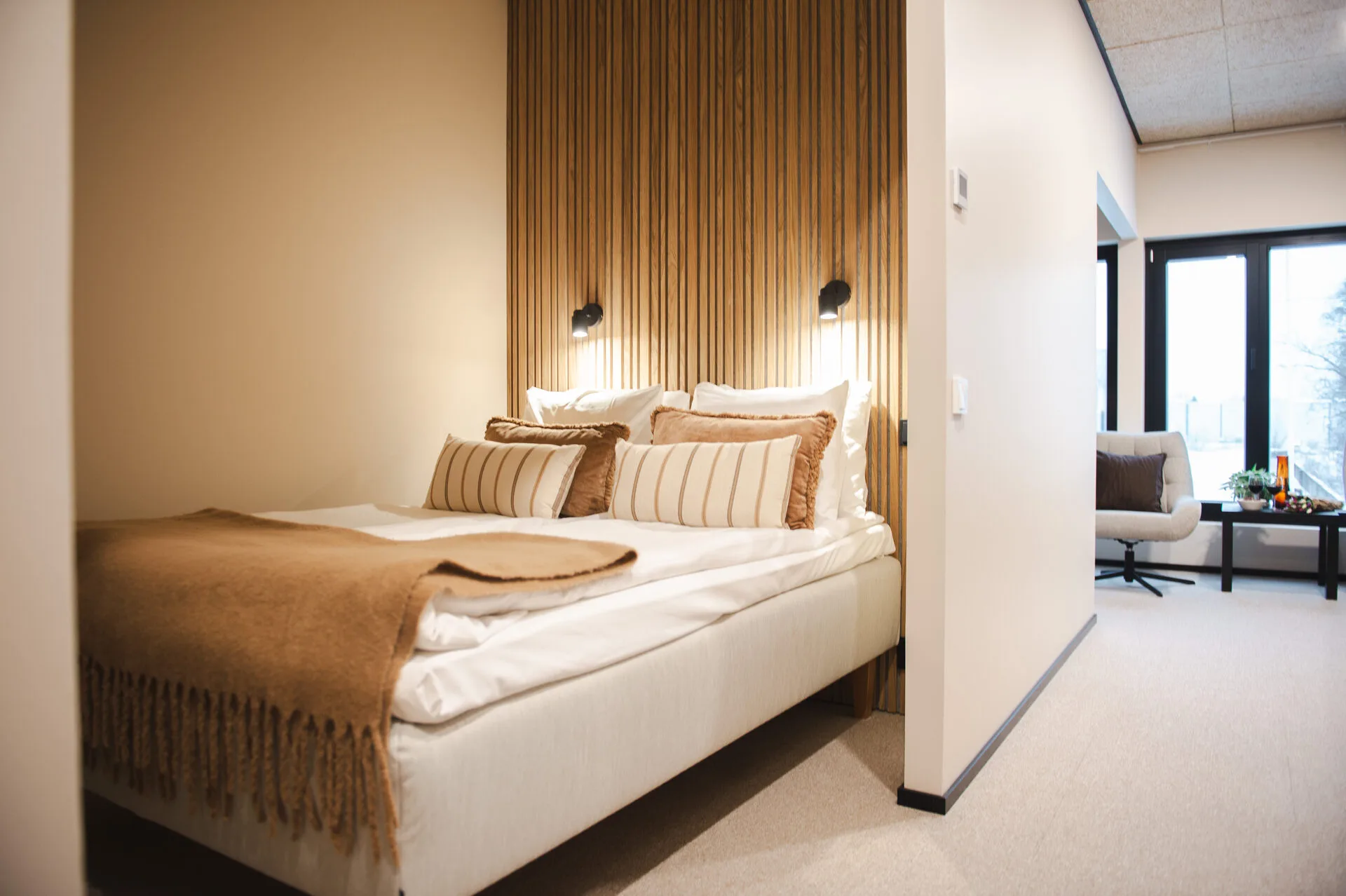
Fitness hotels design their rooms with recovery and an active lifestyle in mind. This typically means superior mattress quality for deep sleep, strong soundproofing to ensure undisturbed rest, excellent air quality and ventilation, and practical features such as space to store sports equipment and easy access to the gym without leaving the building.
Sleep is the most powerful recovery tool available, and fitness-focused guests understand this. A room that is noisy, stuffy, or uncomfortable undermines everything else the hotel offers. This is why quality fitness hotels pay close attention to the basics: the bed, the air, and the quiet.
Practical considerations also matter. Rooms that accommodate multiple guests, include kitchen facilities for meal preparation, and provide direct access to training areas remove the small daily obstacles that disrupt a healthy routine. At Wasto Inn, each room is designed to support everyday life, with private kitchen corners, access to a shared kitchen, and a direct connection to the gym, and capacity for up to four guests per room.
What dining and nutrition options should a fitness hotel provide?
A fitness hotel should provide dining options that support active guests’ nutritional needs, including high-protein breakfast choices, access to fresh and whole-food ingredients, and ideally kitchen facilities so guests can prepare their own meals. On-site cafes or restaurants with health-conscious menus add further value.
Nutrition is a critical part of any fitness routine, and guests who train seriously pay close attention to what they eat. A fitness hotel that offers only a continental breakfast of pastries and processed food sends a mixed message. The best fitness hotels either provide a kitchen guests can use, partner with a nutritionally aware food provider on-site, or offer both.
For longer stays in particular, access to kitchen facilities is not a luxury but a necessity. Guests staying for several weeks for project work or extended travel need to be able to cook for themselves sustainably, and a fitness hotel that supports this makes a meaningful difference to their overall experience.
Who benefits most from staying at a fitness hotel?
The guests who benefit most from a fitness hotel are those for whom maintaining a training routine while travelling is a genuine priority. This includes business travellers on extended assignments, project workers staying for weeks or months, competitive athletes in training, and health-conscious leisure travellers who do not want to sacrifice their fitness habits on holiday.
Business and project travellers are a particularly strong match for the fitness hotel model. Long-term stays away from home can be physically and mentally draining, and access to a high-quality gym and recovery facilities helps maintain both performance and well-being. The ability to train without extra cost or logistical effort is a meaningful quality-of-life benefit during demanding work periods.
Leisure travellers who prioritise wellness over sightseeing also find fitness hotels appealing. Rather than returning from a holiday feeling sluggish from inactivity and indulgent eating, they can come home feeling genuinely recharged. Families and small groups also benefit when rooms accommodate multiple guests, making the per-person cost competitive while still offering premium facilities.
Related Articles
- How does a fitness hotel in Kokkola combine work and wellbeing?
- When is a fitness hotel a better choice than renting an apartment?
- Why does gym access matter when booking a business hotel stay?
- What is an aparthotel and how does it differ from a traditional hotel?
- Can a fitness hotel accommodate a group of up to four guests per room?